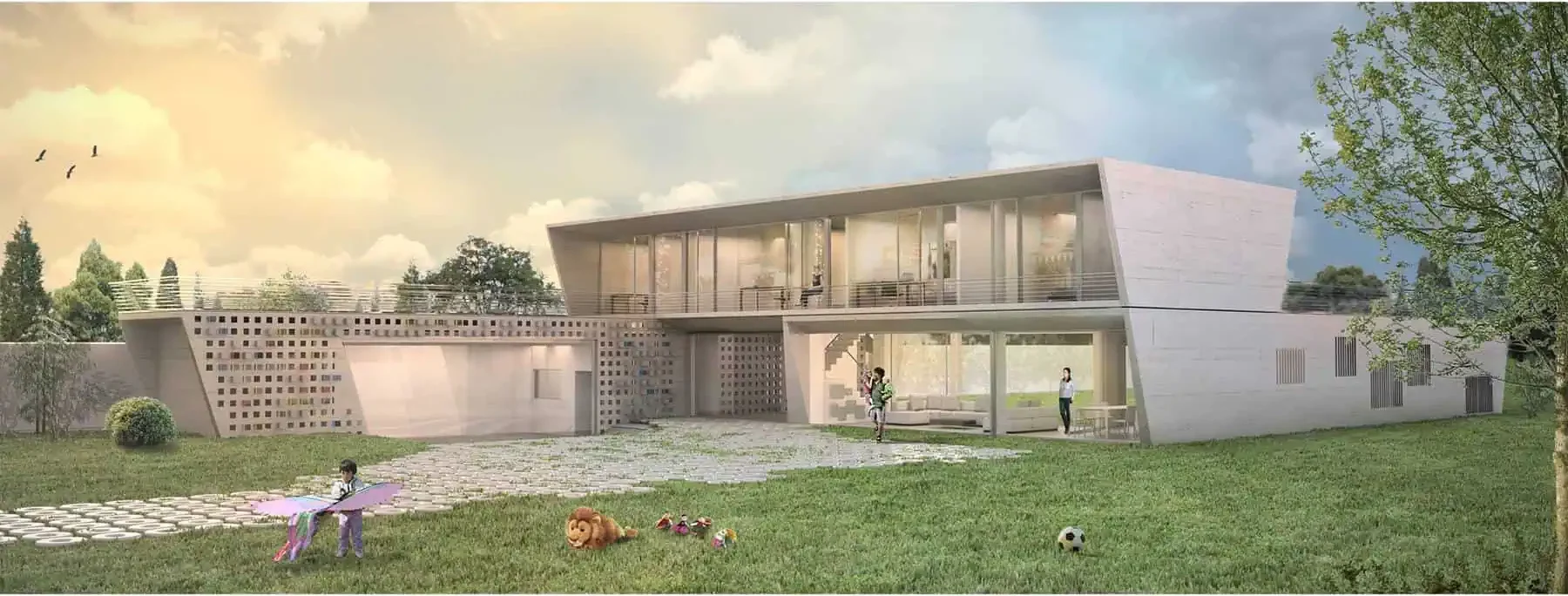
A development sells on its price, its location, its layouts and the state of the market. Exterior design replaces none of that. It matters in what is left when everything else is alike: between two buildings in the same area at the same price, buyers choose the one they would be proud to show. And in an off-plan sale, what they can show best is the image of the building’s facade.
If most buyers choose the building that stands out, the developer has two options: sell faster, or sell for more. A developer under no pressure for cash may prefer to raise the price and sell more slowly, because the return on the investment is higher.
Consider the numbers. Suppose that of every 100 the developer takes in, 80 is the cost of the building and 20 is profit. If a better facade lets the price rise by 5 per cent, the developer takes in 105 and profit goes from 20 to 25. Five per cent more on the price is a quarter more profit.
A developer who needs cash can do both: sell part of the building quickly to secure liquidity, and raise the price on the rest to improve the return. Either way, they come out ahead.
There is one more figure to add: a distinctive facade can cost more. Suppose the facade accounts for 15 per cent of the building’s cost — 12 of those 80 — and that improving it makes it 25 per cent more expensive. Cost goes from 80 to 83. There are three ways to absorb that, and they can be combined:
- Raise the price by the same amount or more. A 3 per cent rise covers it; anything beyond that depends on what demand will bear.
- Distribute the budget differently. A building that already stands out for its facade does not need Italian marble and designer furniture inside to carry it, and the budget finds its balance between outside and in. That was the strategy agreed for GSV 29.
- Explore fabrication from the start. Sometimes, working through the construction with several manufacturers from the early design stages brings the cost down. At the Taipei Weather Station, IMO took the facade fins from 30 per cent of the budget to 5 by changing how they were made, not what they were made of. At Liming Zhongshan, it brought the aluminium second skin in 40 per cent below other manufacturers’ quotes by adjusting the assembly, the thicknesses and the dimensions.
Whichever way they go, a building that stands out puts the developer in a position to choose: sell sooner, sell for more, or both. And there is one thing they always gain: a reputation that adds weight to their name.